





Department of Master of Computer Applications (MCA)
MCA Course Details
Department of Master of Computer Applications (MCA)
The Department of Master of Computer Applications (MCA) at VEMU aims to equip students with advanced computing skills and knowledge, preparing them for successful careers in the IT industry.
Key Highlights:
- Comprehensive Curriculum: The MCA program offers a well-rounded curriculum that includes software development, database management, web technologies, and advanced programming languages.
- Research and Development: Students are encouraged to participate in research projects that explore innovative solutions and advancements in the field of computer applications.
- Modern Infrastructure: Our state-of-the-art computer labs are equipped with the latest software and hardware, providing students with a conducive environment for practical learning and experimentation.
- Industry Connections: We have strong collaborations with leading IT companies, offering students opportunities for internships, industry projects, and placements, ensuring they are well-prepared for the professional world.
Vision of the department:
POs,PSOs & PEOs
Faculty – MCA Department
| Sl.No | NAME OF THE FACULTY | QUALIFICATION | DESIGNATION | Date of Joining | Nature of Association |
| 1 | Dr R Yamuna | Professor & HOD | Ph.D | 16-08-2023 | Regular |
| 2 | Dr I.Nasurulla | Professor | Ph.D | 14-05-2024 | Regular |
| 3 | Dr M.Sharmila | Associate Professor | Ph.D | 20-03-2024 | Regular |
| 4 | Mrs V.Kalpalatha | Associate Professor | MCA | 01-07-2022 | Regular |
| 5 | Mr A. J. Raja Sekhar | Associate Professor | MCA | 11-02-2022 | Regular |
| 6 | Mrs M Yamuna | Assistant Professor | MCA | 27-01-2021 | Regular |
| 7 | Mr P Chandra Sekhar Reddy | Assistant Professor | MCA | 25-05-2022 | Regular |
| 8 | Mrs A.Lohitha | Assistant Professor | MCA | 22-09-2022 | Regular |
| 9 | Mrs E Sindhu | Assistant Professor | MCA | 06-05-2023 | Regular |
| 10 | Ms M Pavithra | Assistant Professor | MCA | 29-07-2024 | Regular |
| 11 | Mrs S.Safiya | Assistant Professor | MCA | 25-02-2025 | Regular |
| 12 | Mr M.Venkateswarlu | Assistant Professor | MCA | 23-06-2025 | Regular |
| 13 | Mrs A Pallavi | Assistant Professor | MCA | 23-06-2025 | Regular |
| 14 | Mr T.Kumar | Assistant Professor | MCA | 23-06-2025 | Regular |
| 15 | Ms R.Pravilasha | Assistant Professor | MCA | 07-11-2025 | Regular |
| 16 | Mr V.Raju | Assistant Professor | MCA | 24-07-2025 | Regular |
| 17 | Ms P.Jyothsna | Assistant Professor | MCA | 24-07-2025 | Regular |
| 18 | Ms A.Lahari | Assistant Professor | MCA | 26-12-2025 | Regular |
| 19 | Mrs B.Gayathri | Assistant Professor | MCA,( Ph.D) | 26-02-2026 | Regular |
| 20 | Ms A.Bharathi | Assistant Professor | MCA | 29-04-2026 | Regular |
| 21 | Mr V.Deekshith | Assistant Professor | MCA | 29-04-2026 | Regular |
| 22 | Ms K.Lavanya | Assistant Professor | MCA | 29-04-2026 | Regular |
| 23 | Mr P.JayaChowdaiah | Assistant Professor | MCA | 05-04-2026 | Regular |
| 24 | Mr K.Munichandra | Assistant Professor | MCA | 05-04-2026 | Regular |
| 25 | Ms M.Geervani | Assistant Professor | MCA | 05-11-2026 | Regular |
| 26 | Mrs K.Chandana | Assistant Professor | MCA | 18-05-2026 | Regular |
Student Activities
Will be updated soon!
Faculty Activities
Will be updated soon!
ELECTRICAL CIRCUITS AND SIMULATION LAB
The laboratory experiments in Electrical Circuits lab are oriented to provide practical understanding of circuit theory concepts. Linking the theory with practice. It is very important for any student to learn how to put theory into practice. With this view, the relation of theoretical circuit elements, circuit components and theoretical laws to understanding of circuit functioning is the main objective of the Circuits lab.
ELECTRICAL MACHINES LAB
The main objective of electrical machine lab II is to familiarize the students with all necessary AC electrical machines like asynchronous and synchronous motors, which further includes single phase and three phase induction motors, alternators, and synchronous motors, all of which help to enhance the technical skills of students.
POWER ELECTRONICS AND SIMULATION LAB
The Power Systems Simulation Laboratory (PSSL) research areas include modeling, simulation, and optimization of electric power systems (reliability); and planning, protection, automation, control and power quality. The lab is equipped with power system simulation software and hardware such as protective relays and Fault Analysis etc.
ELECTRICAL MACHINES LAB
This is the main lab where experiments like load test on various machines, speed control tests, open circuit tests, short circuit tests, etc are carried out and also wide variety of practical experiments are performed here with combination of different rotating machines. The laboratory is also used for research activities in machines and to carry out project works on energy conversion.
The Electrical machines lab is equipped with all devices and equipment needed to conduct all tests and measurements that the students need to learn more about the major types of DC/ AC motors, DC/ AC generators and single - phase and three- phase transformers. The main objective of this lab to become familiar with different types of machines and to study about their characteristics.
ELECTRICAL MACHINES LAB
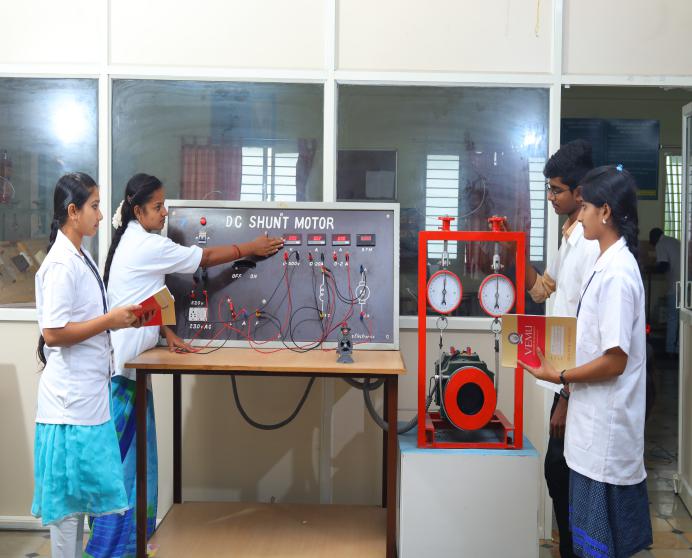
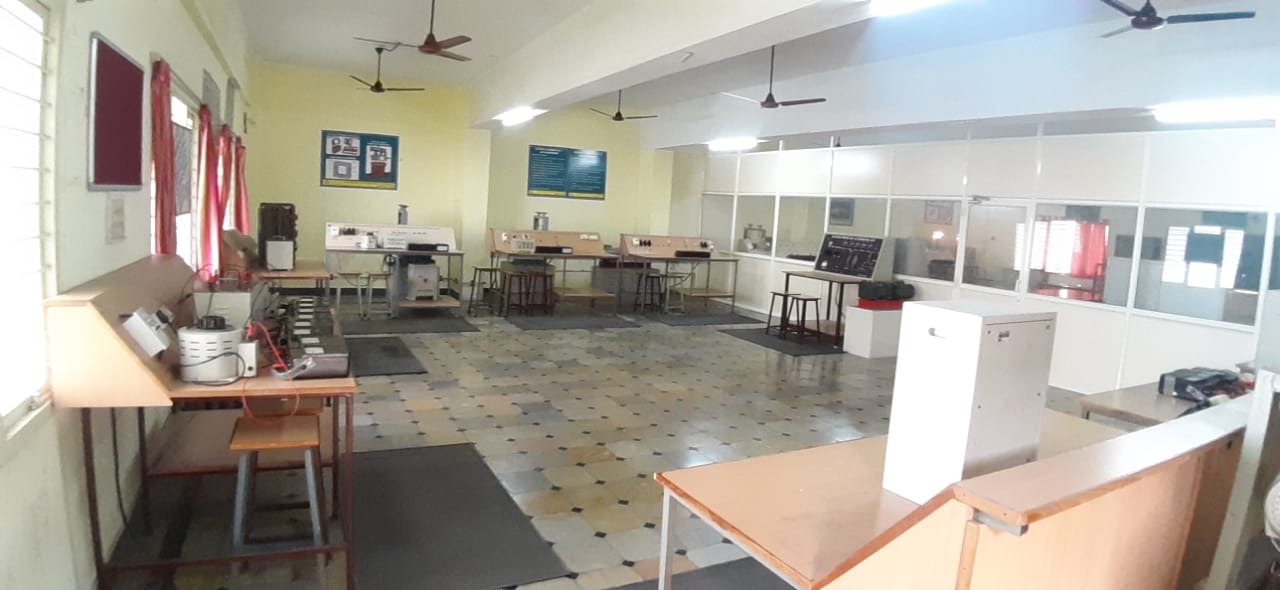
The Electrical machines lab is equipped with all devices and equipment are needed to conduct all tests and measurements that the students need to learn more about the major types of DC/ AC motors, DC/ AC generators and single - phase and three- phase transformers. The main objective of this lab to become familiar with different types of machines and to study about their characteristics.
SIMULATION LAB
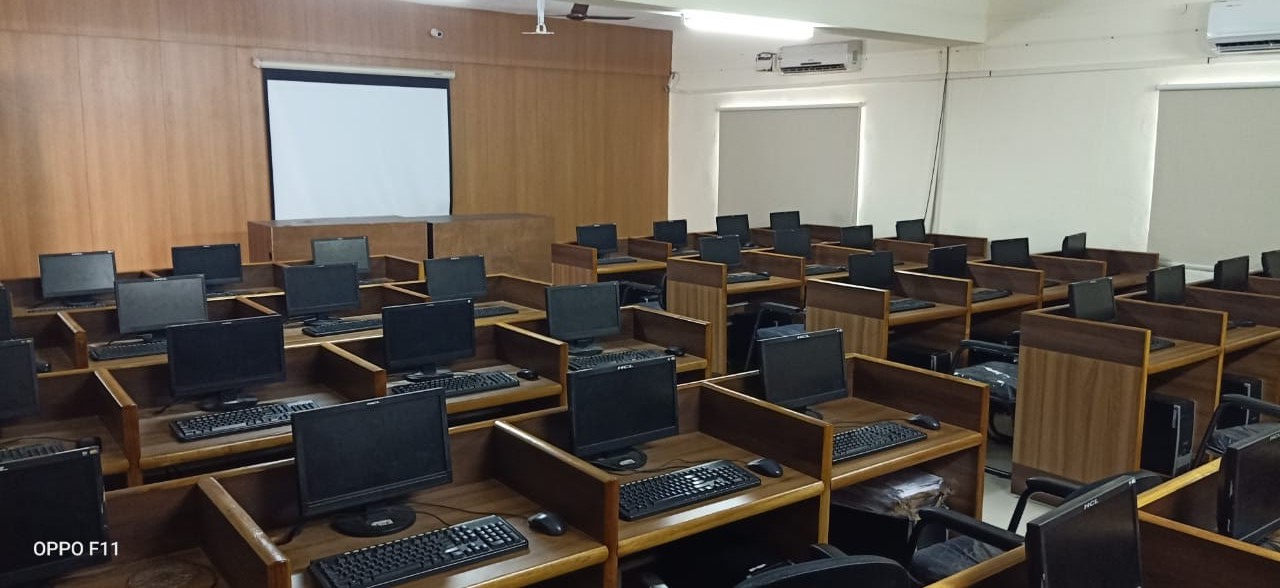
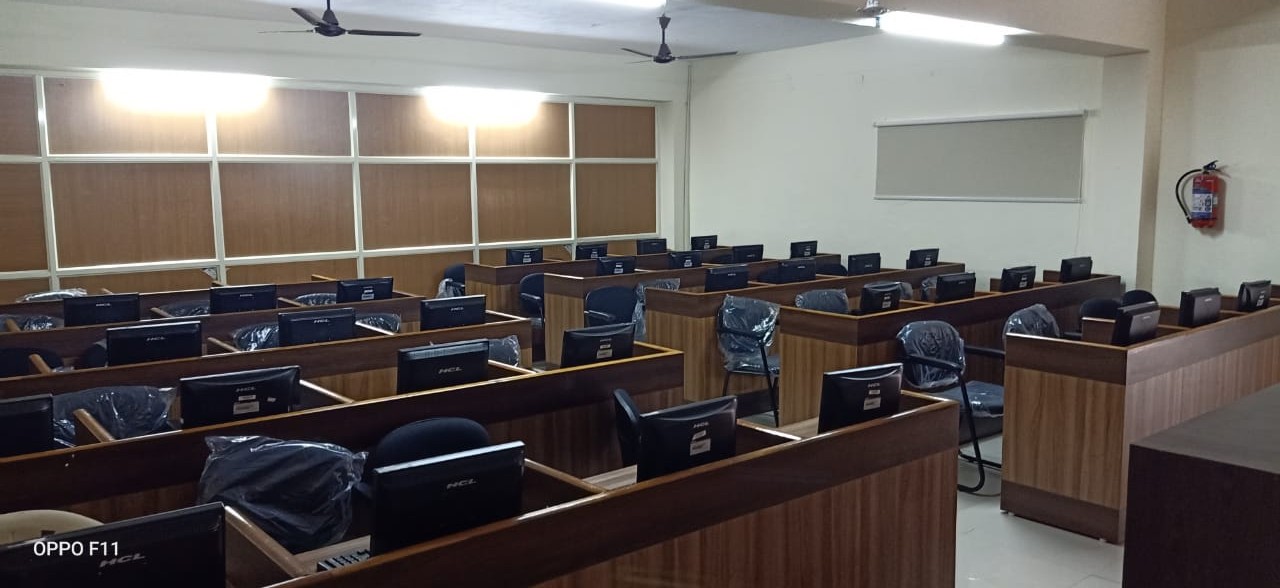
The significance of the Simulation Lab is renowned in the various fields of engineering applications. For an Electrical Engineer, it is obligatory to have the practical ideas about the different Circuits and Simulation.The main objective of this lab is to design and verify the results for different types of electrical circuits,control systems and power electronic circuits by using P-SPICE and MATLAB software
CONTROL SYSTEMS LAB
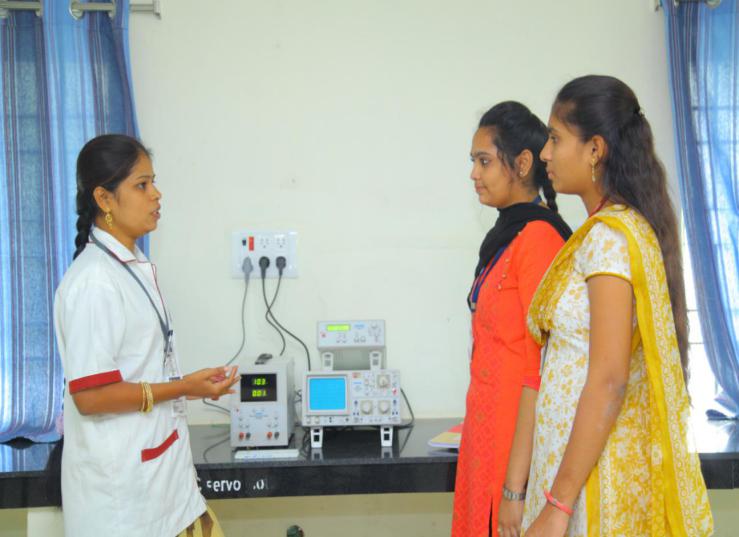
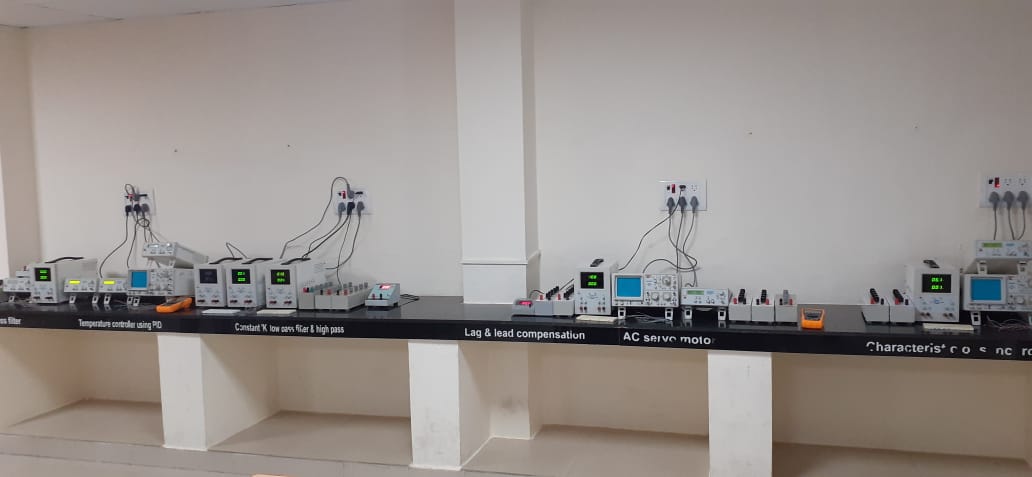
To achieve the goal, Control Systems laboratory has been set up to provide the realistic environment. This Lab makes the students of Electrical and Electronics Engineering (EEE) understand the practical aspect of control system. How a control system is used for controlling errors.
NETWORK ANALYSIS AND ELECTRCAL CIRCUITS LAB
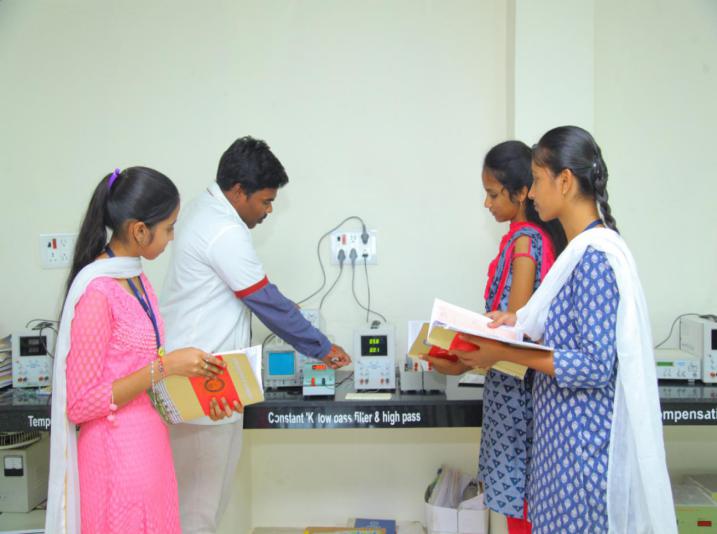
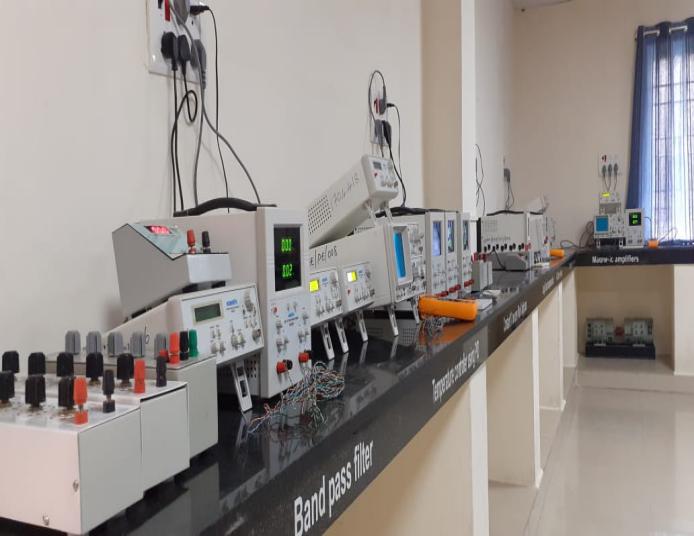
The objective of the Network Analysis and Electrical Circuits lab is to expose the students to the different electrical circuits and give them experimental skill. The purpose of lab experiment is to continue to build circuits using different circuit elements and verification of different laws,theorems etc.
ELECTRICAL MEASUREMENTS LAB
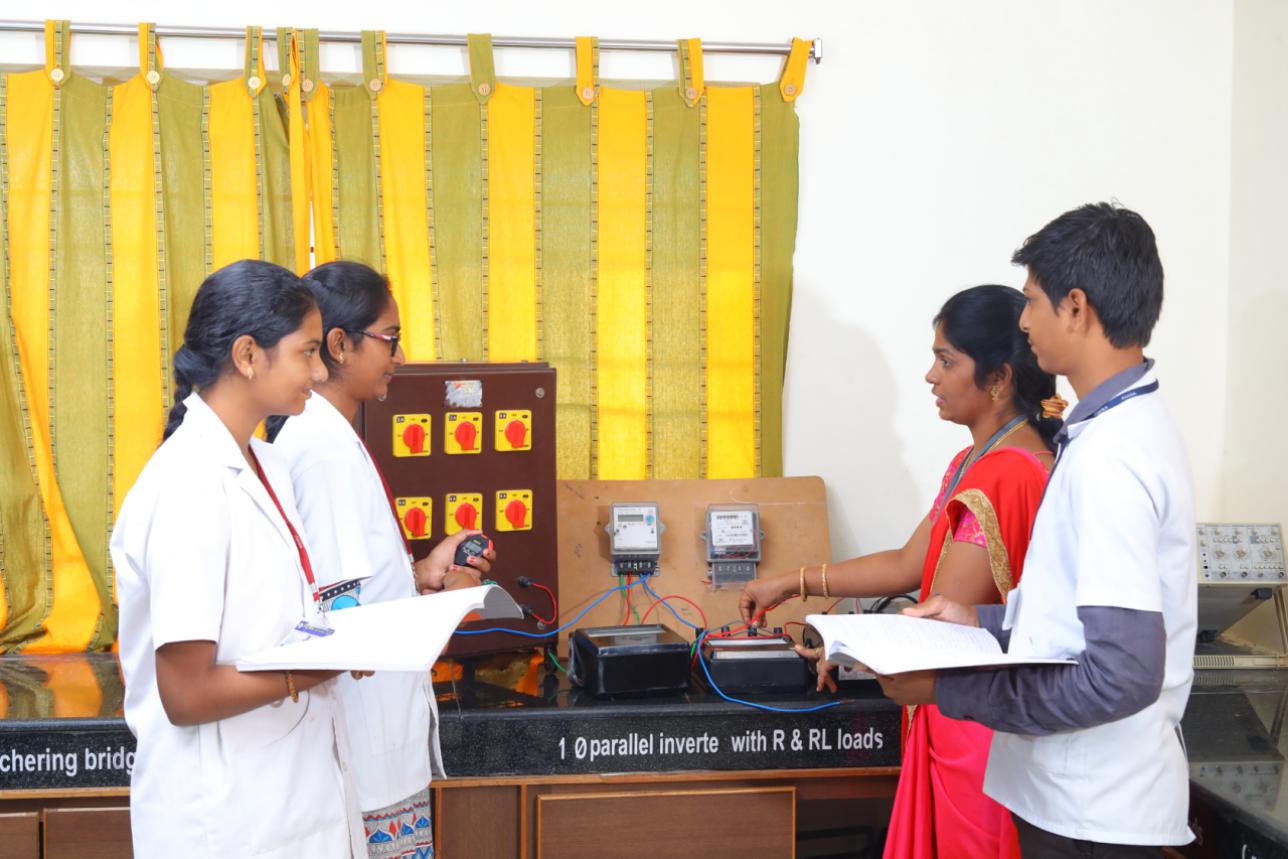
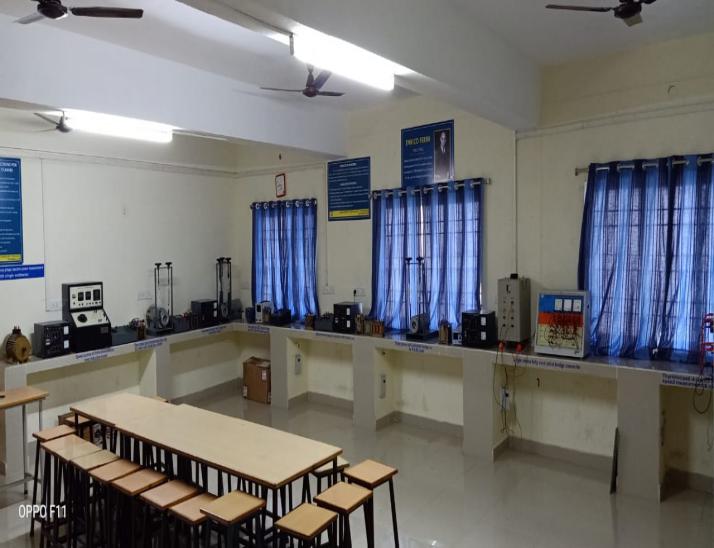
For an electrical engineer it is obligatory to have an idea about electrical measurements lab
The main objectives of this lab course are
- To expose the students to different types of electrical measuring instruments.
- To make the students understand how to use these instruments for measuring an unknown quantity.
- To calibrate & test different types of electrical measuring instruments.
POWER ELECTRONICS AND SIMULATION LAB
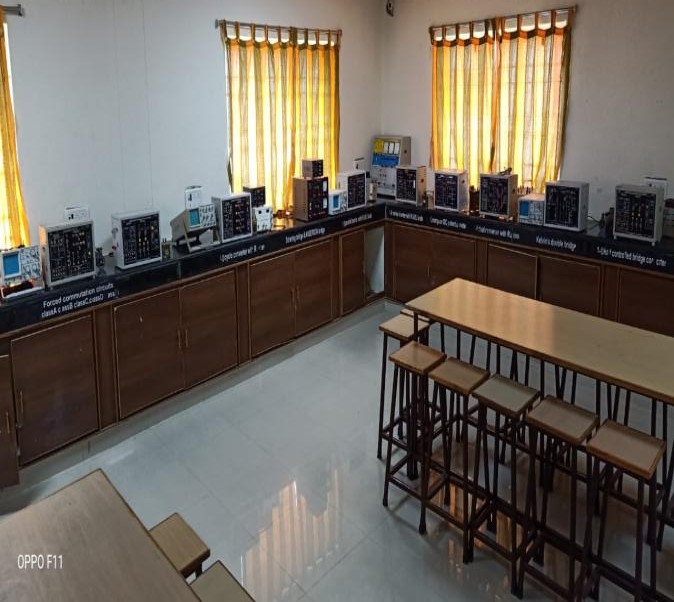
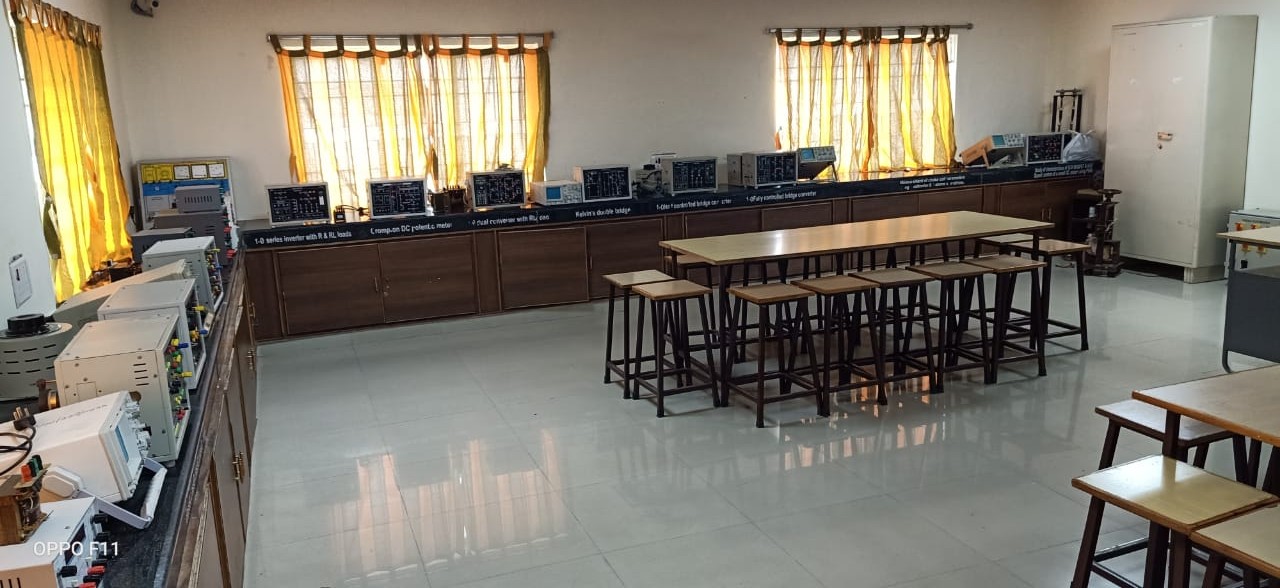
The power electronics lab enhances the EEE students by providing them the better understanding of the concepts and working of advanced power semiconductor devices and power electronics circuits. ... This lab enables the students to make and test their project.
POWER SYSTEMS AND SIMULATION LAB
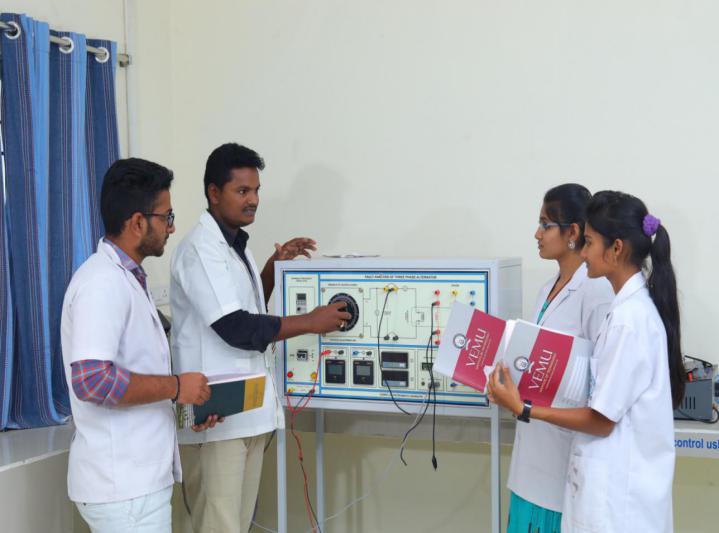
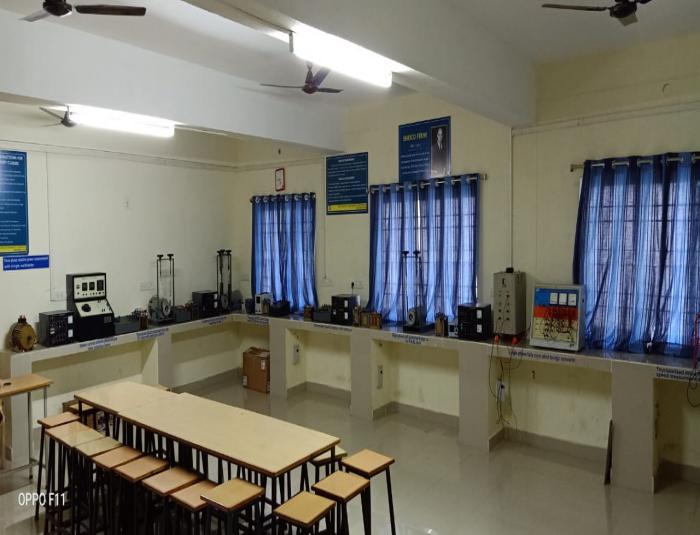
The Power Systems Simulation Laboratory (PSSL) research areas include modeling, simulation, and optimization of electric power systems (reliability); and planning, protection, automation, control and power quality. The lab is equipped with power system simulation software and hardware such as protective relays and Fault Analysis etc.
Technical Association
Will be updated soon!
NPTEL Videos
| S.No |
Name of the Subject |
Topic Name |
URL Link |
|---|---|---|---|
| 1 | Electrical Machines-I | Operating Principles of DC Machines | https://nptel.ac.in/courses/108/105/108105017/ |
| Constructional features of DC Machines | |||
| Generated EMF & Torque | |||
| Armature Reaction | |||
| Commutation | |||
| DC Shunt Generators | |||
| Separately Excited DC Generators | |||
| Compound Generators | |||
| Characteristic of DC shunt motors | |||
| Testing of DC shunt motors | |||
| Testing of DC series motors | |||
| 2 | Electrical Machines-II(15A02401) | Operating principles and Construction of 1-Phase Transformers | https://nptel.ac.in/courses/108/105/108105017/ |
| Equivalent Circuit of 1-Phase Transformers | |||
| Testing of 1-Phase Transformers | |||
| Efficiency of 1-Phase Transformers | |||
| Voltage Regulation of 1-Phase Transformers | |||
| Parallel Operation of 1-Phase Transformers | |||
| Introduction to 3-Phase transformers | |||
| Construction of 3-Phase transformers | |||
| Analysis & Testing of 3-Phase transformers | |||
| 3 | Basic Electrical Circuits | Current | https://nptel.ac.in/courses/108/106/108106172/ |
| Voltage | |||
| Electrical Elements & Circuits | |||
| KCL & KVL | |||
| Voltage Source and Current Source | |||
| Resistor, Inductor and Capacitor | |||
| 4 | Power System Protection (IIT Roorkee) | Fundamentals of Protective Relaying | https://nptel.ac.in/courses/108/107/108107167/ |
| Current based Relaying Scheme | |||
| Protection of Transmission lines using Distance Relaying | |||
| Protection of Transformers | |||
| Protection of Generators | |||
| Arc Interruption theory in Circuit Breakers | |||
| 5 | Power Electronics | Power devices-Diodes, SCR,Traic,GTO, MOSFET and IGBT | https://nptel.ac.in/courses/108/102/108102145/ |
| Single Phase Uncontrolled and Controlled Rectifiers | |||
| Three phase Rectifiers | |||
| Single Phase and Three phase AC Voltage Controllers and Cyclo converters | |||
| VSI and CSI | |||
| 6 | Electrical Measurements | PMMC Instruments | https://nptel.ac.in/courses/108/105/108105153/ |
| Electrodynomic Instruments | |||
| Moving Iron Instruments | |||
| Electrostatic Instruments | |||
| Derivation of Deflecting Torque in Electrostatic, Moving Iron and Electrodynomic Instruments | |||
| Bridges | |||
| Potentiometers and single phase energy meters | |||
| Errors in Instrument Transformers | |||
| 7 | FACTS | Introduction | https://nptel.ac.in/courses/108/107/108107114/ |
| Multilevel Inverter | |||
| Shunt Compensator and Static Var Compensators | |||
| Series Compensators | |||
| UPFC | |||
| Comparison of UPFC with Series and Shunt devices and IPFC | |||
| 8 | Elecromagnetic Thoery (EMF) | Introduction to Electromagnetic Thoery | https://nptel.ac.in/courses/108/104/108104087/ |
| Vetor analysis and Coordinate system | |||
| Electric potential, Gauss’s law, Divergence, Poission’s and Laplace’s equation | |||
| Polarization and Boundary condition | |||
| Boit savart’s law, magnetic force, torque and dipole | |||
| Maxwell’s equation and wave propagation and solution of Helmholtz equation | |||
| 9 | HVDC Transmission | Comparison of HVAC and HVDC systems, Type of HVDC Transmission systems | https://nptel.ac.in/courses/108/104/108104013/ |
| Analysis of HVDC converter | |||
| HVDC system control features, Control Schemes | |||
| Power flow analysis of AC-DC systems | |||
| Multi-terminal HVDC system | |||
| HVDC system application in wind power generation. | |||
| 10 | Power system operation and Control | Power system Controls, Generator and Transmission line Constraints | https://nptel.ac.in/courses/108/101/108101040/ |
| Stability problems in power systems | |||
| Frequency control and speed governor | |||
| Reactive power control, Power flow control and HVDC Converters | |||
| Real and Reactive power scheduling | |||
| Structure of deregulated industry and Indian scenario | |||
| 11 | Power System Analysis | Modeling of Power System components, Network admittance and Impedance atrices | https://nptel.ac.in/courses/108/104/108104051/ |
| Load flow studies | |||
| Economic Operation of Power systems | |||
| Short Circuit Studies and un Symmetrical and Symmetrical components | |||
| Stability | |||
| 12 | Network Signal and Systems | Introduction to signals, Laplace transforms | https://nptel.ac.in/courses/108/105/108105065/ |
| Bode plot and pole zeros | |||
| Driving point immitance functions | |||
| Two element synthasis | |||
| Graph theory | |||
| Image and Iterative Impedance | |||
| RLC Two terminal Synthesis | |||
| 13 | Control Engineering | Introduction to feed back problem and basic feed back structure | https://nptel.ac.in/courses/108/102/108102043/ |
| Concepts of Stability and Routh’s stability criterion | |||
| Root locus | |||
| Nyquist stability criterion |
Students Zone
Will be updated soon!
PPT
| S.No | Subject Code | Subject Name |
| 1 | 20A54101 | Linear Algebra and Calculus |
| 2 | 20A56201T | Applied Physics |
| 3 | 20A52101T | Communicative English |
| 4 | 20A03101T | Engineering Drawing |
| 5 | 20A03101P | Engineering Graphics Lab |
| 6 | 20A56201P | Applied Physics Lab |
| 7 | 20A52101P | Communicative English Lab |
| 8 | 20A02101P | Fundamentals of Electrical Circuits Lab |
| 9 | 20A02101T | Fundamentals of Electric Circuits |
| S.No | Subject Code | Subject Name |
| 1 | 20A54201 | Differential Equations and Vector Calculus |
| 2 | 20A51101T | Chemistry |
| 3 | 20A05201T | C-Programming & Data Structures |
| 4 | 20A04101T | Electronic Devices & Circuits |
| 5 | 20A03202 | Engineering Workshop |
| 6 | 20A05201P | C-Programming & Data Structures Lab |
| 7 | 20A51101P | Chemistry Lab |
| 8 | 20A04101P | Electronic Devices & Circuits Lab |
| 9 | 20A99201 | Environmental Science |
| 10 | 20A05202 | IT Workshop |
| S.No | Subject Code | Subject Name |
| 1 | 20A54302 | Complex Variables &Transforms |
| 2 | 20A02301T | Electrical Circuit Analysis |
| 3 | 20A02302T | DC Machines & Transformers |
| 4 | 20A04303T | Digital Logic Design |
| 5 | 20A52301 | Managerial Economics & Financial Analysis |
| 6 | 20A02301P | Electrical Circuit Analysis lab |
| 7 | 20A02302P | DC Machines & Tranformers Lab |
| 8 | 20A04303T | Digital Logic Design Lab |
| 9 | 20A05305 | Application Development with Python |
| 10 | 20A52201 | Universal Human Values |
| S.No | Subject Code | Subject Name |
| 1 | 20A54402 | Numerical Methods & Probability Theory |
| 2 | 20A02401T | Power Electronics |
| 3 | 20A02402T | AC Machines |
| 4 | 20A02403T | Electromagnetic Field Theory |
| 5 | 20A04404P | Analog Electronic Circuits Lab |
| 6 | 20A02401P | Power Electronics Lab |
| 7 | 20A02402P | AC Machines Lab |
| 8 | 20A02404 | Circuits Simulation & Analysis using PSPICE |
| S.No | Subject Code | Subject Name |
| 1 | 20A02501 | Power System Architecture |
| 2 | 20A02502T | Control Systems |
| 3 | 20A02503T | Measurements & Sensors |
| 4 | 20A02504a | Switchgear and Protection |
| 5 | 20A02502P | Control Systems Lab |
| 6 | 20A02503P | Measuremts & Sensors lab |
| 7 | 20A05505a | Java Programming |
| S.No | Subject Code | Subject Name |
| 1 | 20A02601T | Power System Analysis |
| 2 | 20A02602T | Digital Computing Platforms |
| 3 | 20A04502T | Digital Signal Processing |
| 4 | 20A02604a | HVDC and FACTS |
| 5 | 20A04606 | Basic VLSI Design |
| 6 | 20A02601P | Power Systems Analysis Lab |
| 7 | 20A02602P | Digital Computing Platforms Lab |
| 8 | 20A04502P | Digital Signal Processing Lab |
| 9 | 20A02606 | Applications of Soft Computing Tools in Electrical Engineering |
| 10 | 20A99601 | Intellectual Property Rights & Patents |
| S.No | Subject Code | Subject Name |
| 1 | 20A02701a | Power System Operation & Control |
| 2 | 20A02702a | Electrical Distribution System & Automation |
| 3 | 20A04403T | Linear & Digital IC Applications |
| 4 | 20A52701b | Management Science |
| 5 | 20A05704c | Software Engineering |
| 6 | 20A04706 | Principles of Cellular & Mobile Communications |
| 7 | 20A02706 | Energy Conservation and Audit |
MCA Lecture Notes
Events
Lorem ipsum dolor sit amet consectetur adipisicing elit. Neque, eveniet earum. Sed accusantium eligendi molestiae quo hic velit nobis et, tempora placeat ratione rem blanditiis voluptates vel ipsam? Facilis, earum!

Tirupati - Chittoor Highway,
Chittoor (Dt), AP - 517112.